Tre was trying to understand who he was long before alcohol ever tried to define him.
He was born in Chapel Hill, raised by a white mother who loved him deeply and a father who was in and out of prison. From the beginning, Tre felt different. His skin color often spoke before he had the chance to. In school he felt watched, misunderstood, sometimes judged. He carried questions about where he fit and who he was supposed to become.
When his family moved to Pittsboro, the transition was hard. He struggled to focus in school and battled ADHD. At home, alcohol was present. His mother was fighting her own addiction. His stepfather struggled too. Tre grew up quickly, helping raise his younger siblings, trying to be steady in a home that often was not. He loved his family, but the weight of responsibility sat heavy on him, as he was still trying to figure himself out.
The pressure became too much, at sixteen he had his first drink. He remembers the drink “quieting the noise in my head.” Not only that, but his insecurities faded. He didn’t feel like he had to hold it all together, this led to him going out with the wrong crowd.
After barely graduating, Tre left home. He stayed with friends in places that were falling apart, yet somehow those places felt more peaceful than home. He was not a bad kid. He was a hurting one. Mental health struggles crept in quietly. There were moments he felt completely numb, and he began chasing that numbness every day. He worked hard but often showed up drunk.
He wanted structure. He wanted belonging. So, he joined the Marines. He hoped the Marines would give him brotherhood and camaraderie. In many ways, it did. He showed up. He served and he deployed to the Philippines, Korea, and Japan. He learned discipline and strength. But inside, he was still searching. Alcohol followed him there. He was never late to drills or formations, but he rarely showed up sober. The pressure, the unspoken pain, the constant striving wore on him.
After six years, he was exhausted. To leave, he had to admit he was not okay. He had to say out loud that he was struggling with thoughts of ending his life. For three days in a mental hospital, he felt lost and unsure of who he even was anymore. But somehow while he was there, he felt satisfied. He said, “I got more out of helping others while I was there then the facility helping me.”
When Tre came to Charlotte, he was still carrying that emptiness. He worked at Target and Harris Teeter, but drinking followed him. He was caught drinking on the job. He stole food when he was hungry. Friends told him the truth. They said he was an alcoholic. Deep down, he knew they were right. Month after month his mother was paying his bills for him.
He looked into treatment programs in other states, but most required insurance or money he did not have. The help he knew he needed felt out of reach. Then he heard about Rebound at Charlotte Rescue Mission.
There was no insurance required. No cost. The program was made possible by donors who believed men like Tre were worth investing in. He was in disbelief.
When he walked through the doors of Rebound, he was tired. Detox was painful. He left once and tried to do it his own way. It did not work. In 2022, after finishing the last of his beer in his car, he walked back in. This time he was ready to listen.
He asked for discipline. He allowed counselors to challenge him. He followed the structure. Slowly, something began to change. He graduated. He entered the recovery living program and he earned his peer support certification.
Somewhere along the way, he found the brotherhood he had been searching for. Not the kind built only on uniforms and rank, but the kind built on honesty, accountability, and shared healing.
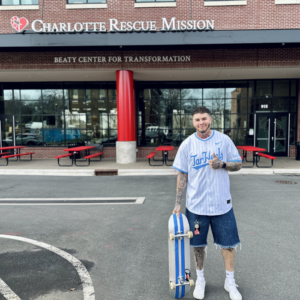
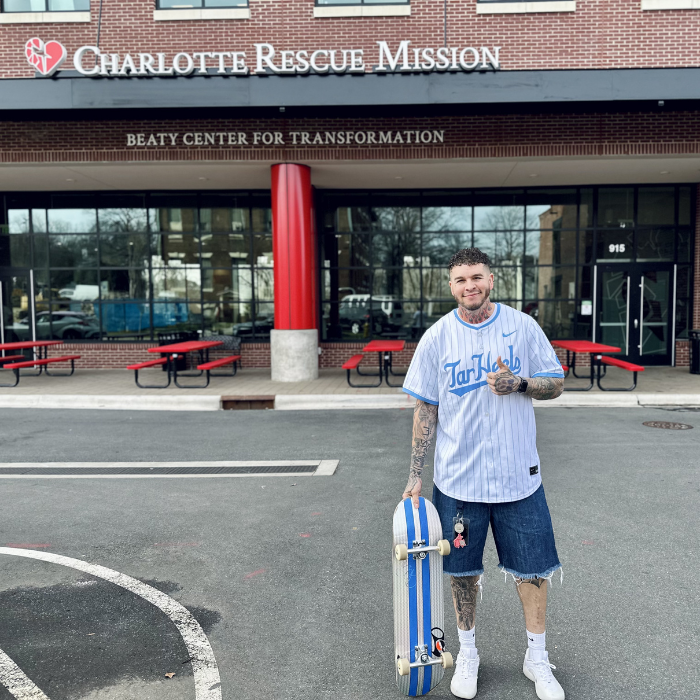
Today, Tre works at Charlotte Rescue Mission. He gives back what was freely given to him. He walks alongside men who feel forgotten, especially veterans who are struggling to adjust after service. He understands how hard it is to leave a place where camaraderie is constant and step into a world that does not always know how to receive you.
Tre does not speak with pride; he speaks with gratitude. His mother is now sober. He is rebuilding relationships. He is working the steps. He is continuing his education using the GI Bill. He believes deeply that recovery is possible because he has lived it.
Tre once feared alcohol and mental health struggles would take his life. Instead, he found hope at Charlotte Rescue Mission, a place sustained by generosity and faith. When he looks at the men who walk through those doors, he sees himself. Never meeting a stranger, he gently and kindly tells them the truth he had to learn. You are not too far gone, you are not defined by your worst day, and you still have purpose. It’s because someone gave to make his second chance possible, he now gets to help offer that same chance to others.